When designers collaborate, magical things can happen!
Some event details look effortless because they are. Most look effortless because someone spent weeks making sure they would be.
These centrepieces were firmly in the second category.
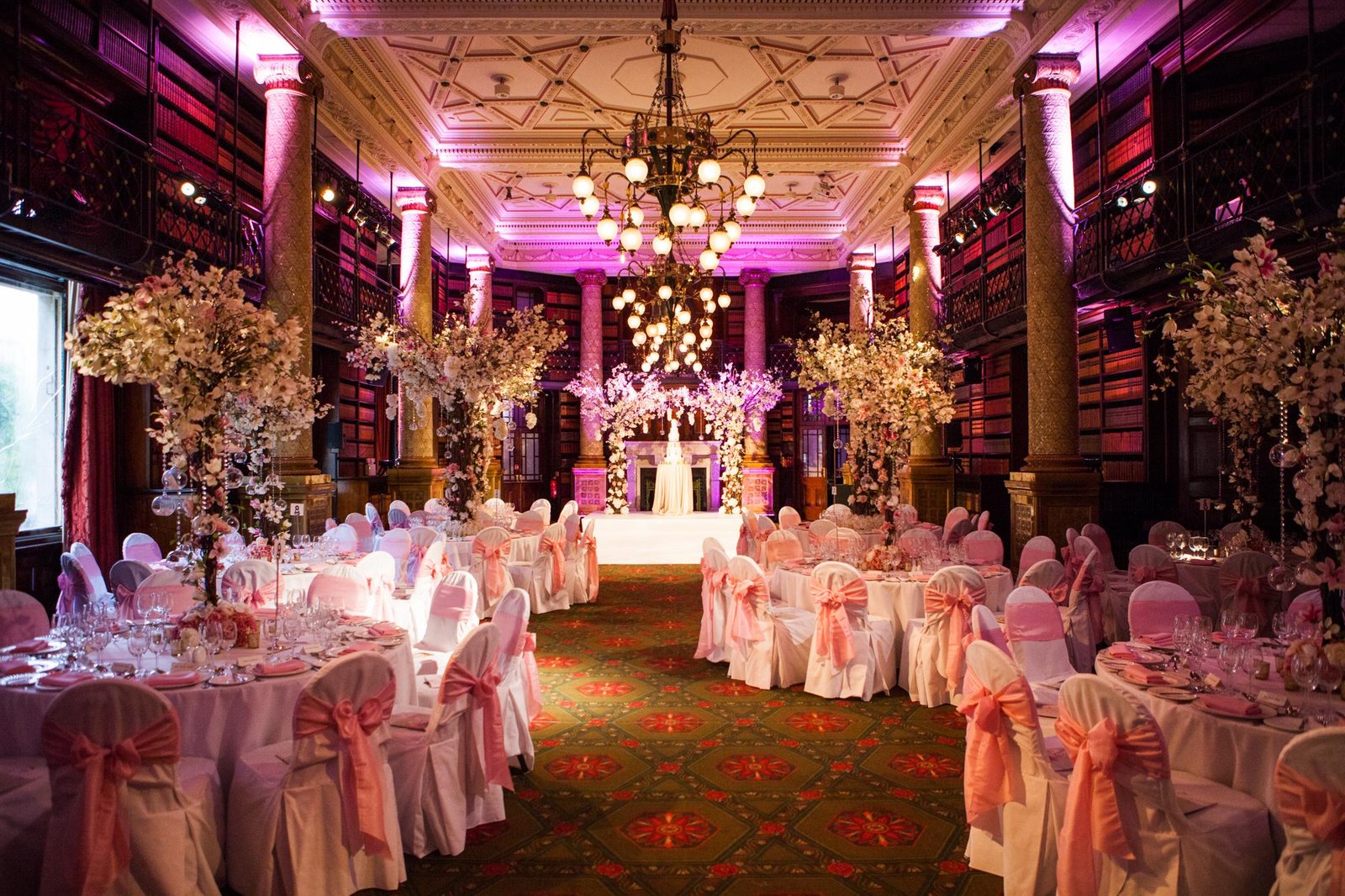
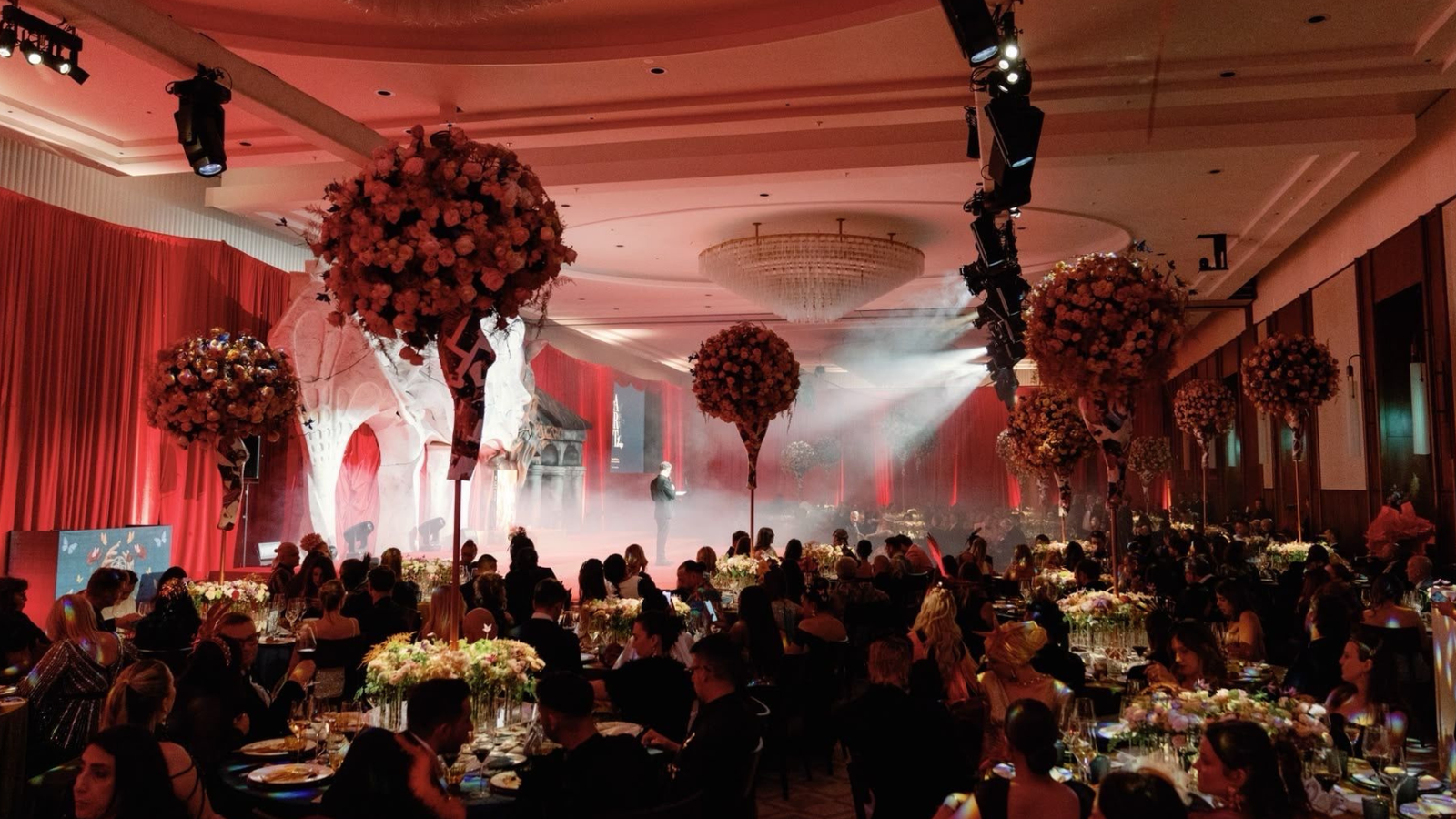
When 350 guests walked into the ballroom at The Chancery Rosewood London for the RSVP Awards back in April, they were met by 37 striking centrepieces, enormous clouds of roses simulating ‘Hair like a giant afro’ on mannequin bodices covered with pages extracted from the fabulous book ‘The Art of Design’ by Tomas De Bruyne. These were suspended above the tables on slender, sculptural stems. The tallest stood over three metres high. From a seat at the table, they looked like they were floating.
They were not floating. They were engineered. This was a book launch with a difference!
The Brief
This was a collaboration we loved from the first conversation. Tomas De Bruyne, the international floral designer behind the concept, came to us with an idea that was equal parts beautiful and structurally alarming: full-scale floral spheres, packed with fresh roses, balanced high above each tablescape on a narrow inverted stem, the tallest reaching more than three metres.
Tomas brought the vision. House of Verve’s job was the fabrication: making 37 of these pieces stand up, stay up, and look flawlessly doing it.
Anyone who has worked with fresh florals at scale knows the problem immediately. Roses are heavy. Wet floral mechanics are heavier. And the entire weight of each piece would be sitting at the very top of a tall, slim structure, on a table surrounded by seated guests, glassware and candlelight for hours.
The design was non-negotiable. So the engineering had to catch up.
Testing before trusting
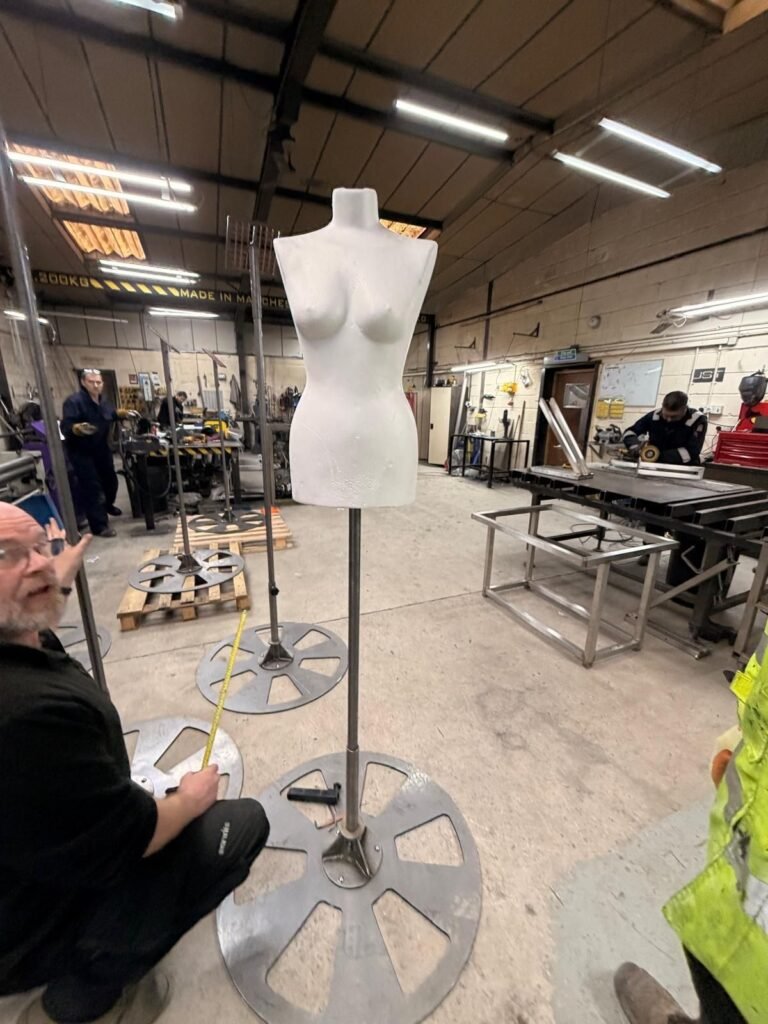
Before a single flower was ordered, the structures went through their paces in the workshop. We load-tested every stand, including, at one point, strapping 20kg of gym dumbbells to the tops of the frames to simulate the full weight of a finished floral sphere, and then some.
If a structure was going to fail, we wanted it to fail in the workshop, with weights, not in a ballroom, above a table of guests.
Bases were weighted and re-weighted. Poles were checked for flex. Each of the 37 frames had to hold significantly more than it would ever carry on the night before it was signed off. Only then did the build move forward.
The Fabrication
The stems were a project in themselves. Each one was handcarved by our poly prop maker into a bodice with an inverted-cone silhouette and then finished by hand ready to be wrapped piece by piece in printed floral paper, decoupage-style by Tomas’ team, so that even the structure holding the flowers became part of the design. Exposed poles were painted in a copper effect. From the table to the top of the sphere, everything guests could see was intentional.
Then came the flowers: thousands of stems of roses in blush, cream, coral and gold, built into full, dense spheres designed to be viewed from every angle because in a room of 350 people, there is no “back” of a centrepiece, shaped to look like the hair piece of the body below.
The Install
At The Chancery Rosewood, the room came together layer by layer: mirrored tablescapes, low floral rings at guest level, and finally the towers themselves, dressed and checked from ladders piece by piece. Every sphere was inspected, every base tested one last time in position.
By the time the doors opened, all evidence of the workshop, the weight tests and the ladders was gone. What remained was the design Tomas had imagined at the very start and the reason we love collaborations like this one. A designer with a wild imagination, and a team who refuse to say it can’t be built.
The Result
Thirty-seven floating floral towers, over three metres at their tallest, in front of 350 guests who photographed them all night and asked about them for weeks afterwards. Nobody at those tables was thinking about load ratings or centre of gravity. That was exactly the point.
The most memorable event details often take the most work behind the scenes. These took more than most. We’d do it all again tomorrow.
Planning an event that needs something nobody else has managed to build? Talk to us.